
LiftMaster 1/2 HP Manual: A Comprehensive Guide
This comprehensive guide details operation, installation, and troubleshooting for your LiftMaster 1/2 HP garage door opener. It includes wiring diagrams, safety precautions, and warranty details.
Explore remote programming, sensor alignment, and maintenance procedures, ensuring optimal performance and longevity of your LiftMaster system. A 2-year warranty is included.
Understanding Your LiftMaster 1/2 HP Opener
Your LiftMaster 1/2 HP garage door opener is a sophisticated system designed for reliable and secure operation. It utilizes a built-in radio receiver operating on a 315 MHz frequency, enabling seamless integration with LiftMaster remote controls and accessories like the 971LM and 977LM/877MAX. Understanding its components and functionality is key to maximizing its benefits.
This opener features a robust motor and gear assembly (41C4220A) designed for durability. Safety is paramount, incorporating a safety reversing sensor system to prevent door closure on obstructions. The system also includes a Timer-to-Close feature, adjustable from 5 to 60 seconds, adding convenience and security. Proper installation, utilizing the standard C2 wiring configuration or alternative setups (see page 11), is crucial for optimal performance.
Familiarize yourself with the location of the serial number (on the electrical box cover) for warranty purposes and future service needs. The LiftMaster Monitored Entrapment Protection (LMEP) device further enhances safety.
Model Identification and Serial Number Location
Accurate model identification is crucial for obtaining the correct replacement parts, accessing specific documentation, and ensuring compatibility with accessories. Your LiftMaster 1/2 HP opener has a designated model number, typically found on the unit’s packaging or a label affixed to the motor assembly.
However, the serial number is equally important, particularly for warranty claims and service inquiries. This unique identifier allows LiftMaster to track the manufacturing date and specific configuration of your opener. The serial number is located on the electrical box cover – carefully inspect this area to find the alphanumeric code.
Record both the model and serial number in a safe place, such as your owner’s manual or a dedicated home maintenance log. Having this information readily available will streamline any future interactions with LiftMaster customer support or authorized service technicians. Installation date should also be recorded alongside these numbers for warranty tracking, as a 2-year warranty is provided.
Safety Precautions and Warnings
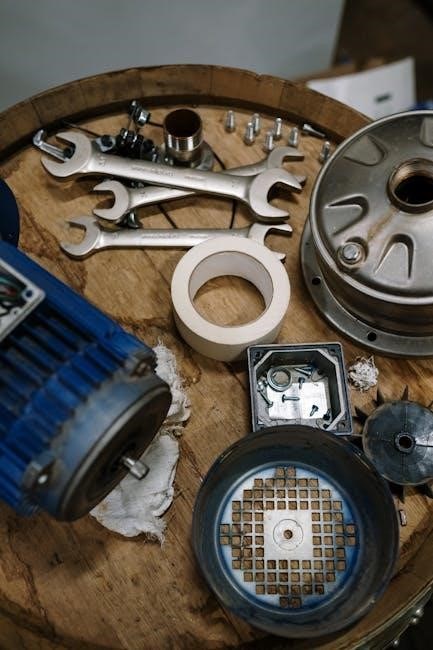
Prioritize safety during installation, operation, and maintenance of your LiftMaster 1/2 HP garage door opener. Always disconnect power to the opener before performing any adjustments or repairs. Never allow children to operate the opener or play near the door.
Regularly test the safety reversing sensor to ensure it functions correctly. This critical safety feature prevents the door from closing on obstructions. Remove any obstructions from the sensor path and align the receiving eye as needed (see page 23 for detailed instructions). A misaligned or obstructed sensor can compromise safety.
Be cautious when using the manual release. Ensure the door is fully supported before disconnecting the trolley. Use the manual release only when necessary and re-engage it immediately after completing maintenance. Failure to heed these warnings could result in serious injury or property damage. LiftMaster Monitored Entrapment Protection (LMEP) is recommended for enhanced safety.

Installation and Wiring
Proper installation and wiring are crucial for safe, reliable operation. Utilize the standard C2 wiring configuration, or consult page 11 for alternatives. Record the installation date for warranty purposes.
Standard C2 Wiring Configuration
The C2 wiring configuration is the factory setting for most LiftMaster 1/2 HP openers, offering a straightforward installation process. This setup typically involves connecting the power source – usually 120V AC – to the designated terminals within the opener’s electrical box. Carefully match the wire colors: black to black (hot), white to white (neutral), and green or bare copper to the ground terminal.
Ensure all connections are secure and comply with local electrical codes. The C2 configuration is designed for standard residential garage door setups. Double-check the wiring before powering on the opener to prevent damage or malfunction. If you encounter any uncertainty, consult a qualified electrician.
Refer to the wiring diagram located on the opener itself or within this manual for a visual guide. This configuration supports basic operation, including remote control functionality and safety features. Alternative wiring configurations are available (see page 11) for specific installations or compatibility requirements.
Alternative Wiring Configurations (See Page 11)
Beyond the standard C2 wiring, LiftMaster 1/2 HP openers accommodate alternative configurations for diverse installation scenarios. These variations cater to setups with existing wiring, specific lighting controls, or unique power supply arrangements. Page 11 provides detailed diagrams illustrating these options, including configurations for three-wire systems or those requiring connection to external timers or sensors.
Carefully review the diagrams to identify the configuration that best suits your needs. Incorrect wiring can lead to opener malfunction or safety hazards. Always disconnect power before attempting any wiring changes. If you are unfamiliar with electrical work, consult a qualified electrician.
These alternative setups may require adjustments to the opener’s settings to ensure proper operation. Refer to the programming section of this manual for guidance. Understanding these options expands the versatility of your LiftMaster opener, allowing for seamless integration into various home automation systems.
Installation Date Recording & Warranty Information (2 Year Warranty)
Properly recording your installation date is crucial for warranty validation. Locate the designated space on the opener’s electrical box or within this manual to clearly note the date of installation. This date initiates the 2-year warranty period, covering defects in materials and workmanship. Retain this manual and your proof of purchase as documentation.
The warranty excludes damage resulting from improper installation, misuse, or unauthorized modifications. Regular maintenance, as outlined in this manual, is recommended to maintain warranty coverage. For warranty claims, contact Chamberlain Group, Inc., providing the model number, serial number, installation date, and a detailed description of the issue.
This warranty provides peace of mind, ensuring your LiftMaster 1/2 HP opener is protected against manufacturing defects. Registering your product online can expedite the claims process. Refer to the Chamberlain Group website for complete warranty details and registration instructions.

Operation and Programming
Effortlessly control your garage door with remote controls, the CLOSE/STOP buttons, and a programmable timer-to-close feature. Adjust the timer from 5 to 60 seconds for convenience.
Using Remote Controls (Programming Steps)
Programming your LiftMaster remote controls is a straightforward process. Begin by ensuring the garage door is in a fully closed position. Locate the “Learn” button on the opener motor unit – it’s typically yellow or orange. Press and release this button; the indicator light will illuminate, signaling the opener is in programming mode.
Within 30 seconds, press and hold the desired button on your remote control. Watch for the garage door opener lights to blink, confirming successful programming. If the lights do not blink, repeat the process, ensuring you are within range and there are no obstructions.
For multiple remotes, repeat these steps for each additional remote control you wish to program. Remember to allow sufficient time between presses to avoid interference. The built-in radio receiver operates on a 315 MHz frequency, ensuring reliable communication. If programming fails, consult the troubleshooting section for further assistance.
Programming Additional Remote Controls
To program further remote controls for your LiftMaster 1/2 HP opener, the process mirrors the initial programming steps. Begin by activating the programming mode on the motor unit by pressing and releasing the “Learn” button. The indicator light will illuminate, signifying the system is receptive to new remotes.

Within the 30-second window following the “Learn” button press, firmly press and hold the button on the new remote control you intend to pair. Observe the garage door opener lights; a blink confirms successful programming. If no blink occurs, repeat the process, ensuring proximity and a clear signal path.
Repeat steps 1 and 2 for each additional remote control. This allows for convenient access for multiple users. The opener utilizes a 315 MHz radio receiver for reliable communication. Should difficulties arise, refer to the troubleshooting section or consider the LiftMaster Monitored Entrapment Protection (LMEP) device for enhanced safety.
Utilizing the CLOSE or STOP Buttons
The CLOSE and STOP buttons on your LiftMaster 1/2 HP opener provide essential control over garage door operation; Pressing the CLOSE button initiates the door’s downward travel, while the STOP button immediately halts any movement, overriding all other commands. This is crucial for safety and emergency situations.
These buttons function with both the wall-mounted control panel and the remote controls, offering versatile operation. Remember that the STOP button takes precedence; even a door actively closing will cease movement upon its activation. This feature is vital for preventing accidental closures.
For programming purposes, these buttons are also utilized in certain procedures. Always ensure a clear line of sight between the remote or wall panel and the motor unit for reliable signal transmission. The system operates on a 315 MHz frequency. If responsiveness is an issue, check the battery in your remote or consider a replacement.
Timer-to-Close Feature (5-60 Second Adjustment)
The Timer-to-Close feature offers added convenience and security by automatically closing the garage door after a pre-set duration following an opening event. This adjustable timer, ranging from 5 to 60 seconds, can be customized to suit your preferences and lifestyle. Begin with the door in a fully closed position when adjusting this setting.
To activate and adjust the timer, consult the detailed programming instructions within this manual. This feature is particularly useful if you occasionally forget to close the door, enhancing your home’s security. However, always ensure the area is clear of obstructions before enabling this function.
For optimal safety, the LiftMaster Monitored Entrapment Protection (LMEP) device is recommended when utilizing the Timer-to-Close feature. This device provides an extra layer of protection against accidental entrapment. Remember to regularly test the safety sensors to ensure proper functionality.
Troubleshooting Common Issues
Resolve typical problems like blinking lights, safety sensor malfunctions, or door reversal issues. Consult page 23 for sensor alignment and obstruction removal guidance.
Opener Lights Blinking – Safety Sensor Check
If your LiftMaster opener lights are blinking, the first step in troubleshooting is to meticulously check the safety reversing sensors. These sensors are crucial for preventing the door from closing on obstructions, ensuring safety. Begin by visually inspecting the sensors, located near the floor on both sides of the garage door opening.
Ensure the sensors are aligned; the receiving eye should face the sending eye. Any misalignment can disrupt the infrared beam and trigger the blinking lights. Remove any obstructions blocking the beam – this could include dirt, debris, spiderwebs, or even seasonal items stored in the garage.
Carefully clean the lens of each sensor with a soft cloth. Refer to page 23 of the manual for detailed instructions on proper alignment and troubleshooting. A properly functioning safety sensor system is vital for safe and reliable operation of your LiftMaster opener. If the issue persists after these checks, further investigation may be required.
Safety Reversing Sensor Alignment and Obstruction Removal (Page 23)
Proper alignment of the safety reversing sensors is paramount for safe operation. Locate these sensors on either side of your garage door, near the floor. Page 23 of this manual provides detailed diagrams and instructions for achieving correct alignment. The sensors must face each other directly, ensuring a clear, unobstructed infrared beam path.
Begin by verifying there are no physical obstructions blocking the beam. Common culprits include tools, boxes, or accumulated dirt and debris. Clean the sensor lenses with a soft, dry cloth – avoid using liquids. After removing obstructions, test the alignment by walking through the beam while the door is closing.
If the door reverses upon beam interruption, the sensors are functioning correctly. If not, carefully adjust the sensor brackets until proper alignment is achieved. Misalignment is a frequent cause of operational issues, so precise adjustment is crucial. Refer to page 23 for visual guidance and troubleshooting tips.
Door Reversal on One-Inch Board – Adjustment Needs
If your LiftMaster door reverses when encountering a one-inch obstacle, it indicates the force settings require adjustment. This safety feature prevents the door from closing on obstructions, but overly sensitive settings can cause unwanted reversals. Do not disable this safety feature; instead, fine-tune the force adjustments.
Begin by locating the force adjustment knobs on the opener unit. Consult the manual for their precise location, as it may vary by model. Carefully increase the up and down force settings in small increments. After each adjustment, test the door with the one-inch board to assess the change.
Avoid excessive force increases, as this could compromise safety. The goal is to find the minimum force necessary for smooth operation without reversing on minor obstructions. If adjustments don’t resolve the issue, or you’re uncomfortable performing them, consult a qualified garage door technician. Remember, proper force settings are vital for both safety and functionality.

Maintenance and Repair

Regular maintenance extends your LiftMaster’s life. This section covers the manual release disconnect, gear/sprocket assembly replacement (41C4220A), and safety sensor replacement procedures.
Manual Release Disconnect Procedure
To manually operate your garage door during power outages or for maintenance, utilize the release cord. Locate the emergency release cord hanging from the trolley. Pull the cord straight down to disengage the trolley from the door.
Exercise caution as the door may fall rapidly. Support the door during operation. Once disengaged, you can raise or lower the door manually. To re-engage, simply pull the cord again until it clicks back into place.
Ensure the trolley is securely reconnected before resuming normal operation with the opener. If the chain returns to its normal height when the trolley is disengaged and the door reverses on a one-inch board, adjustments are not needed. This ensures safe and reliable operation after manual disconnection and reconnection. Always test the safety features after re-engagement.
Gear and Sprocket Assembly Replacement (41C4220A)
Replacing the gear and sprocket assembly (part number 41C4220A) is a common maintenance task for LiftMaster 1/2 HP openers. Begin by disconnecting the power to the opener at the breaker. Carefully remove the light cover and lens to access the rail assembly.
Detach the motor unit from the rail, then remove the old gear and sprocket assembly. Lubricate the new assembly with a suitable grease before installation. Align the new assembly correctly with the motor shaft and secure it firmly. Reattach the motor unit to the rail, ensuring proper alignment.
Reconnect the power and test the opener’s operation. Verify smooth and quiet operation. Proper installation of the 41C4220A assembly restores the opener’s lifting power and prevents further damage. Always consult the full manual for detailed instructions and safety precautions.
Safety Sensor Replacement
Replacing the safety sensors (41A5034) is crucial for maintaining garage door safety. First, disconnect the opener’s power supply at the breaker. Locate the sensors near the track, typically a few inches above the floor. Gently detach the wires connected to both the sending and receiving eyes.
Remove the old sensors from their brackets and install the new ones, ensuring they are aligned and securely mounted. Reconnect the wiring to the corresponding terminals on each sensor. Proper alignment is vital; the sensors must face each other directly.
Restore power and test the safety system by placing an object in the door’s path. The door should reverse immediately. Misalignment or faulty sensors can compromise safety, so careful installation and testing are essential. Refer to page 23 for alignment details.
Parts and Accessories
Essential replacements include the 971LM remote, 977LM/877MAX keypad, and 41C4220A gear/sprocket assembly. Consider the LiftMaster Monitored Entrapment Protection (LMEP) device for enhanced safety.
Common Replacement Parts (971LM, 977LM/877MAX)
Maintaining your LiftMaster 1/2 HP opener often requires replacing worn components. The 971LM is a popular 1-button remote control, offering convenient access to your garage. When the original 977LM wireless keypad is discontinued, the 877MAX serves as a reliable and compatible substitute, providing secure entry via a pin code.
For internal repairs, the 41C4220A gear and sprocket assembly is a frequently replaced part, crucial for smooth door operation. Regular inspection and timely replacement of these parts prevent more significant issues. Ensure compatibility with your specific LiftMaster model before purchasing replacements. Genuine LiftMaster parts guarantee optimal performance and maintain the integrity of your garage door system. Consider purchasing from authorized dealers for authentic components and support. Proper installation is key to ensuring these parts function correctly and safely.
LiftMaster Monitored Entrapment Protection (LMEP) Device
The LiftMaster Monitored Entrapment Protection (LMEP) device significantly enhances garage door safety. This advanced system goes beyond standard safety sensors, actively monitoring for potential obstructions during the door’s entire travel. It utilizes sophisticated technology to detect changes in door movement, indicating a possible entrapment situation.
When an obstruction is detected, the LMEP device immediately stops and reverses the door, preventing potential injuries or damage. This feature is particularly crucial for households with children or pets. The Timer-to-Close feature requires the LMEP device for safe operation, ensuring the door doesn’t close on an unnoticed obstacle. Installation typically requires professional expertise to guarantee proper functionality and compliance with safety standards. Regular testing of the LMEP device is recommended to confirm its continued effectiveness. Prioritizing safety with LMEP provides peace of mind and protects your family.
Radio Receiver Frequency (315 MHz)
Your LiftMaster 1/2 HP opener is equipped with a built-in radio receiver operating on a frequency of 315 MHz. This frequency allows for wireless communication between the opener and compatible LiftMaster remote controls and keypads. The receiver’s robust signal ensures reliable operation within a specified range, typically up to a considerable distance, depending on environmental factors.
When programming remote controls, the receiver learns the unique security code of each device, preventing unauthorized access. Compatibility is crucial; ensure any aftermarket remotes or accessories also operate on 315 MHz to guarantee seamless integration. Interference from other devices operating on similar frequencies can occasionally occur, but the receiver is designed to minimize such disruptions. Proper antenna positioning can further enhance signal strength. The 315 MHz frequency is a standard in the garage door opener industry, offering a balance of range and reliability. Regularly check for firmware updates to optimize receiver performance.